우리가 사용하고 버려지는 더러운 물들. 이 물들은 어디서 어떻게 바뀌게 될까?
도시 속의 숨은 보물. 폐수처리공학 이야기
Used wastewater, where does all that water go?
The story of urban treasure, Wastewater Engineering (In-Depth)
"물을 내린다." 우리는 하루에도 몇 번씩 무심코 이 행동을 반복한다. 아침에 일어나 세수를 하고, 설거지를 하고, 샤워를 하고, 화장실을 사용하며 흘려보내는 물. 공장에서 생산활동을 하고 그냥 마구 버려지는 물. 이 물방울들의 여정은 버려진 배수구 아래 어둠 속으로 사라지는 순간 끝나는 것일까? 우리가 사용한 그 많은 물이 어디로 가서 어떻게 되는지, 그 기나긴 여정에 대해 깊이 생각해 본 적 있는가?
"Flushing the water." We repeat this action countless times a day without a second thought. The water we use to wash our faces, do the dishes, shower, and use the restroom. and use the factory. Does the journey of these water droplets end the moment they disappear down the dark drain? Have you ever deeply considered where all that water goes and what happens to it on its long journey?
정답은 "아니요, 여정은 이제부터 시작이다!"다. 오늘날 우리가 버리는 '폐수'는 더 이상 가치 없이 버려지는 오물이 아니다. 최첨단 과학 기술을 통해 놀랍게도 전기를 만드는 에너지로, 다시 마실 수 있는 깨끗한 물로, 농작물을 키우는 비료의 원료로 재탄생하는 '도시의 숨은 보물' 이자 '액체 금광(Liquid Gold)' 이다. 그 놀라운 연금술의 중심에는 바로 현대 문명의 필수 기반 시설, 폐수 처리 공학(Wastewater Treatment Engineering)이 있다.
The answer is, "No, the journey is just beginning!" The 'wastewater' we dispose of today is no longer just worthless filth. Through cutting-edge science and technology, it is remarkably reborn as energy to generate electricity, clean water that can be consumed again, and raw material for fertilizer to grow crops. It is the 'hidden treasure of the city' and a 'liquid gold mine.' At the heart of this incredible alchemy lies the essential infrastructure of modern civilization: Wastewater Treatment Engineering.
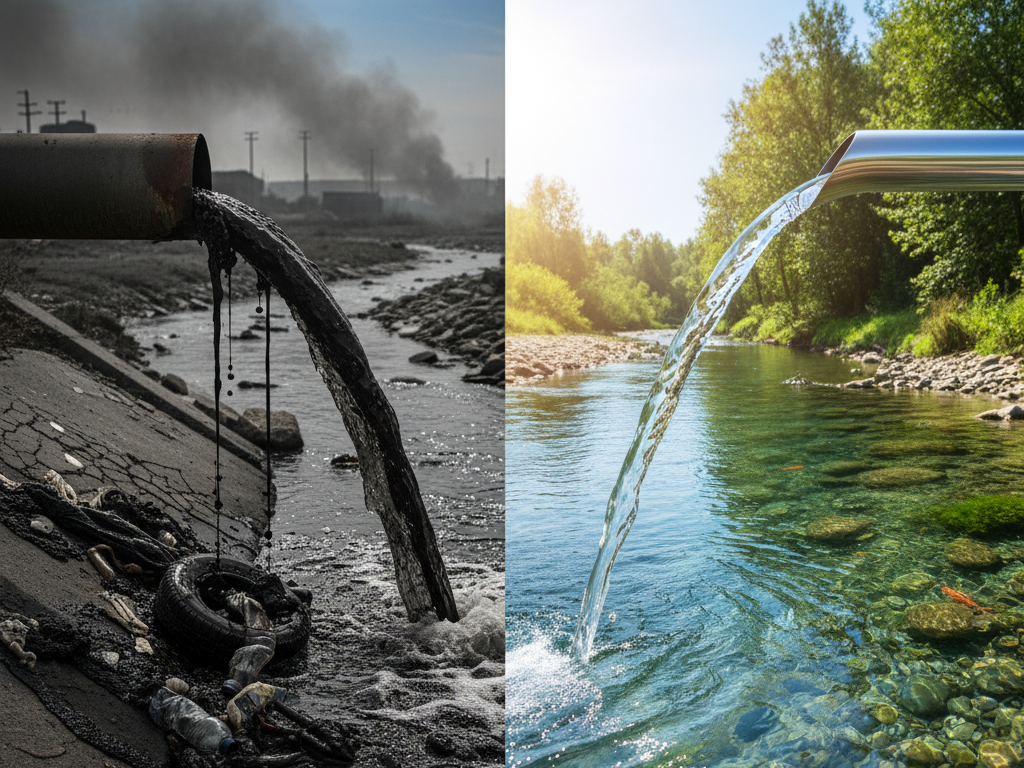
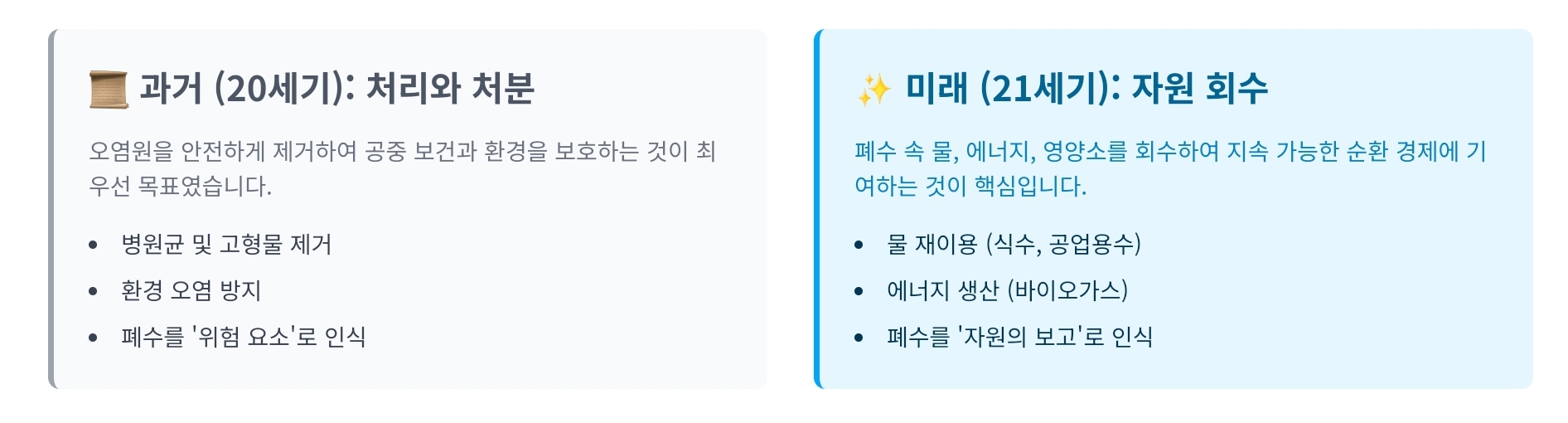
목표의 대전환: '처리'에서 '회수'로, 시대의 변화에 따른 폐수처리 발상의 전환
A Great Shift in Goals: From 'Treatment' to 'Recovery'
인류가 도시에 모여 살기 시작하면서 폐수 처리는 언제나 거대한 숙제였다. 과거의 목표는 명확했다. 오염된 물을 인간의 생활 반경에서 최대한 빠르고 멀리 '처리'하는 것. 19세기 산업혁명 시기 런던의 '대악취(The Great Stink)' 사건처럼, 도시의 강이 거대한 하수구 역할을 하면서 콜레라와 같은 수인성 전염병이 창궐하자, 인류는 비로소 위생적인 하수 처리 시스템의 중요성을 깨닫게 되었다.
Ever since humanity began to gather in cities, wastewater has always been a monumental challenge. The past goal was clear: to 'treat' contaminated water as quickly and as far away from human living spaces as possible. As seen in the "Great Stink" of 19th-century London, when the city's river became a massive sewer, leading to outbreaks of waterborne diseases like cholera, humanity finally realized the importance of a sanitary sewage treatment system.

하지만 21세기에 들어서면서 폐수 공학은 역사상 가장 극적인 패러다임 전환을 맞이한다. 인구 증가, 기후 변화로 인한 물 부족, 화석 연료 고갈 위기 속에서 인류는 새로운 자원의 원천을 찾아야만 했다. 그리고 그 해답을 바로 우리가 매일 버리는 폐수 속에서 찾기 시작했다.
However, entering the 21st century, wastewater engineering has undergone its most dramatic paradigm shift in history. Faced with population growth, water scarcity due to climate change, and the threat of fossil fuel depletion, humanity had to find new sources of resources. And it began to find the answers in the very wastewater we discard every day.

이는 단순히 기술의 발전을 넘어, '선형 경제(생산-소비-폐기)'에서 '순환 경제(생산-소비-재활용)'로 나아가는 인류의 거대한 흐름과 궤를 같이한다. 폐수를 '처리해야 할 골칫거리'에서 '자원을 품은 기회의 원천'으로 바라보기 시작한 이 위대한 발상의 전환은, 미래 도시의 생존과 번영을 위한 핵심 열쇠가 되고 있다.
This goes beyond mere technological advancement; it aligns with humanity's grand shift from a 'linear economy (produce-consume-dispose)' to a 'circular economy (produce-consume-recycle).' This great conceptual shift—from viewing wastewater as a 'nuisance to be treated' to an 'opportunity source laden with resources'—is becoming a key to the survival and prosperity of future cities.
그렇다면 폐수는 어떻게 깨끗한 자원이 될까? 3단계 정화 과정 상세 해부
How Does Wastewater Become a Clean Resource? A Detailed Anatomy of the 3-Stage Purification Process
폐수가 자원으로 재탄생하는 과정은 고도로 정밀하게 설계된 '3단계 정화 과정'을 거친다. 각 단계는 저마다의 중요한 역할을 수행하며, 이 과정들을 통해 탁한 폐수는 점차 맑고 가치 있는 자원으로 변모한다.
The process by which wastewater is reborn as a resource goes through a highly precise, engineered '3-stage purification process.' Each stage performs its own crucial role, and through these processes, murky wastewater is gradually transformed into a clear and valuable resource.
1단계 : 물리적 처리(예비 및 1차처리) - '걸러내고 가라앉히기'
1 Step : Physical Process (Preliminary & Primary Treatment) - 'Screening and Settling'
우리가 막 흘려보내 온갖 것이 뒤섞인 물, 즉 '원수(Raw sewage)'가 폐수 처리장에 도착하면 온갖 종류의 이물질을 포함하고 있다. 이 단계의 목표는 후속 공정을 방해하거나 기계를 손상시킬 수 있는 크고 무거운 물질들을 물리적인 힘으로 제거하는 것이다.
When the water we've just sent down the drain, a mix of everything called 'raw sewage,' arrives at the treatment plant, it contains all sorts of foreign materials. The goal of this stage is to remove large and heavy substances that could interfere with subsequent processes or damage machinery, using physical force.
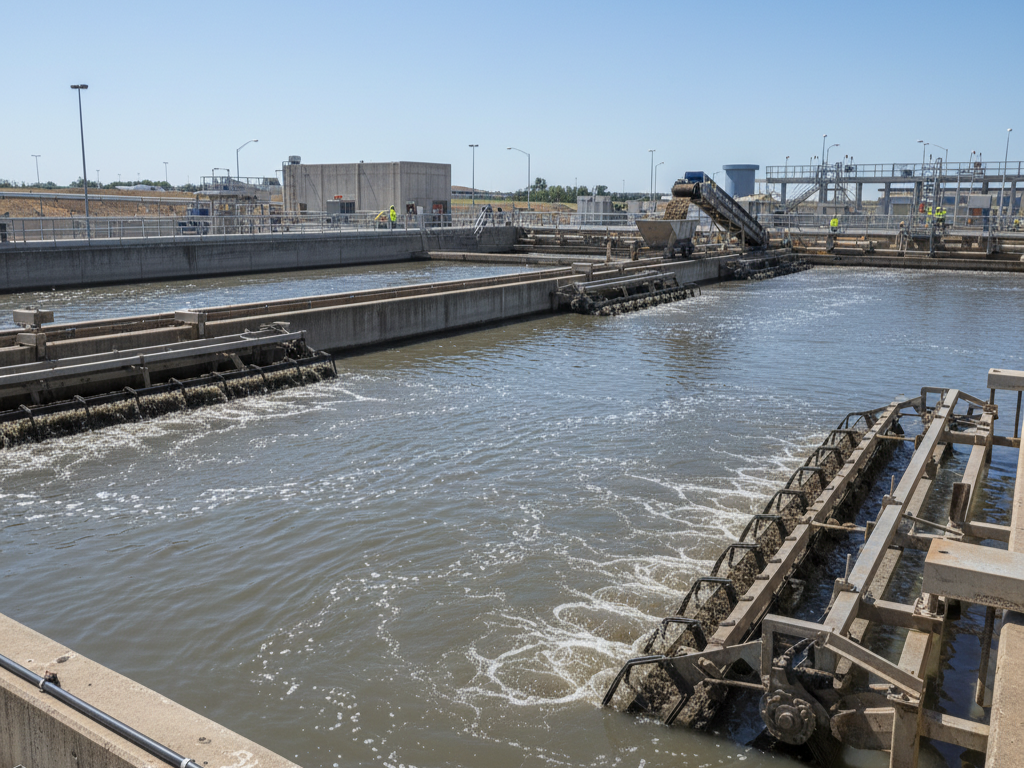
- 스크리닝(Screening): 도시의 거대한 거름망이다. 처리장 가장 앞단에 설치된 스크린이 나무토막, 플라스틱, 비닐, 음식물 찌꺼기 등 비교적 큰 고형물을 걸러낸다.
- 침사(Grit Removal): 모래, 자갈, 깨진 유리, 커피 찌꺼기처럼 물보다 무겁고 작은 무기물 입자들을 가라앉혀 제거한다. 이 '그릿(Grit)'을 제거하지 않으면 펌프나 파이프를 마모시켜 고장을 일으킬 수 있다.
- 1차 침전(Primary Sedimentation): 거대한 침전조에서 물의 속도를 아주 느리게 만든다. 그러면 물보다 비중이 큰 유기물 찌꺼기(슬러지)들이 중력에 의해 서서히 바닥으로 가라앉는다. 여기서 가라앉은 고형물을 '1차 슬러지'라고 부른다. 이 과정만으로도 폐수 속 부유 물질의 약 50~70%, 유기물의 약 25~40%가 제거된다.
- Screening: This is the city's giant colander. Screens installed at the very front of the plant filter out relatively large solids like wood chunks, plastics, vinyl, and food scraps.
- Grit Removal: This step settles and removes inorganic particles that are heavier than water but small, such as sand, gravel, broken glass, and coffee grounds. If this 'grit' is not removed, it can wear down pumps and pipes, causing breakdowns.
- Primary Sedimentation: In a massive tank called a clarifier, the speed of the water is slowed down dramatically. This allows organic solids (sludge) that are denser than water to slowly settle to the bottom by gravity. The solids that settle here are called 'primary sludge.' This process alone can remove about 50-70% of suspended solids and 25-40% of organic matter.
2단계 : 생물학적 처리(2차처리) - '작지만 강한 미생물들의 대활약'
2 Step : Biological Process (Secondary Treatment) - 'The Heroics of the Microbe Task Force'
물리적으로 제거되지 않고 물속에 녹아 있거나 아주 미세한 형태로 떠다니는 유기 오염물질을 제거하는, 폐수 처리의 핵심 단계라고 할 수 있다. 여기서는 눈에 보이지 않는 수많은 '착한 미생물'들이 주인공으로 활약한다.
This is the core stage of wastewater treatment, designed to remove organic pollutants that were not physically removed and are either dissolved in the water or exist as very fine particles. Here, countless invisible 'good microbes' are the heroes of the story.
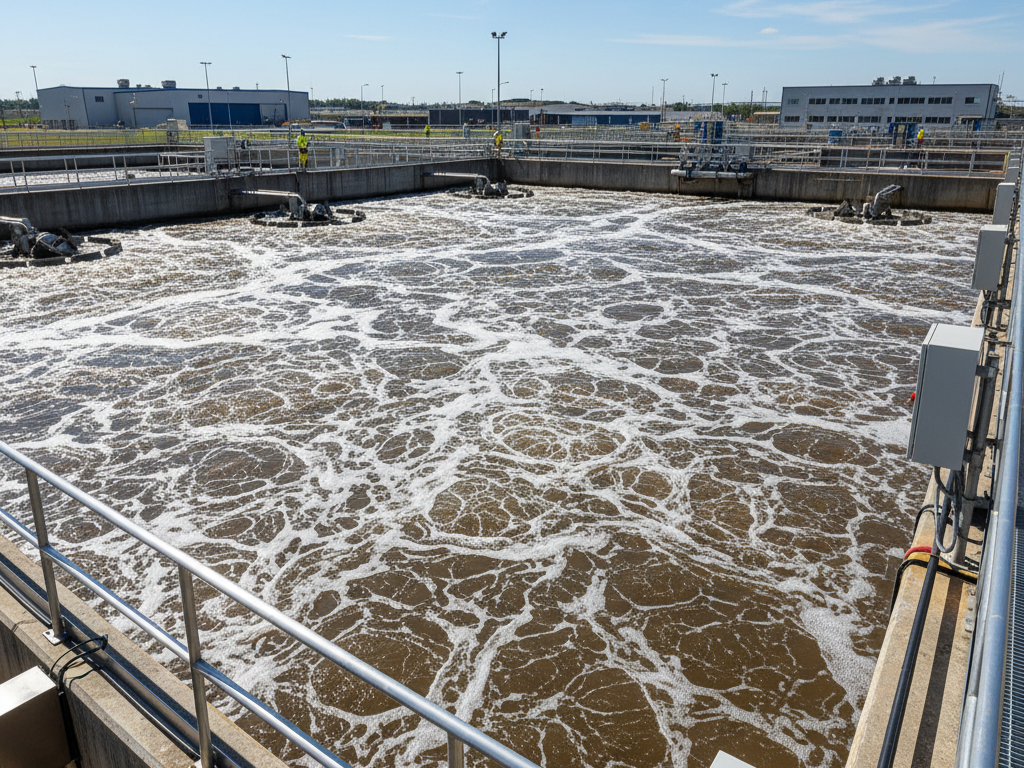
- 활성슬러지 공법(Activated Sludge Process): 가장 널리 사용되는 방법이다. 폭기조라는 거대한 탱크에 1차 처리를 거친 폐수를 넣고, 산소(공기)를 힘차게 불어넣는다. 이 산소를 호흡하며 활발해진 미생물(활성슬러지)들이 폐수 속 유기물을 자신의 먹이로 삼아 엄청난 속도로 분해한다. 이는 마치 자연 하천이 수십 일에 걸쳐 할 정화 작용을 단 몇 시간 만에 압축해서 해내는 것과 같다.
- 2차 침전(Secondary Sedimentation): 폭기조에서 유기물을 배불리 먹은 미생물 덩어리들은 2차 침전조로 옮겨져 다시 한번 조용히 가라앉는다. 이제 상층부에는 아주 맑은 물만 남게 된다. 가라앉은 미생물 슬러지의 일부는 다시 폭기조로 돌려보내 '미생물 특공대'의 개체 수를 유지하고, 나머지는 '잉여 슬러지'로 분리되어 다음 여정을 떠난다.
- Activated Sludge Process: This is the most widely used method. Wastewater from primary treatment is fed into a huge tank called an aeration basin, and oxygen (air) is vigorously pumped in. The microbes (activated sludge), invigorated by breathing this oxygen, consume the organic matter in the wastewater as their food, breaking it down at an incredible speed. This is like compressing a natural river's purification process, which would take days, into just a few hours.
- Secondary Sedimentation: After feasting on organic matter in the aeration basin, the clumps of microbes are moved to a secondary clarifier to settle down quietly once again. Now, only very clear water remains in the upper layer. A portion of the settled microbial sludge is returned to the aeration basin to maintain the 'microbe task force' population, while the rest is separated as 'waste activated sludge' and sent on its next journey.
3단계 : 물리/화학적 처리(고도처리) - '최고급으로 다듬기'
3 Step : Chemical/Physical Process (Tertiary/Advanced Treatment) - 'The Final Polish'
2차 처리까지 마친 물은 이미 상당히 깨끗하지만, 방류될 하천의 수질 기준이나 재이용 목적에 따라 더욱 정밀한 '마무리 작업'이 필요할 수 있다. 이것이 바로 고도 처리다.
The water after secondary treatment is already quite clean, but depending on the water quality standards of the receiving river or its intended reuse, a more precise 'finishing touch' may be required. This is where advanced treatment comes in.
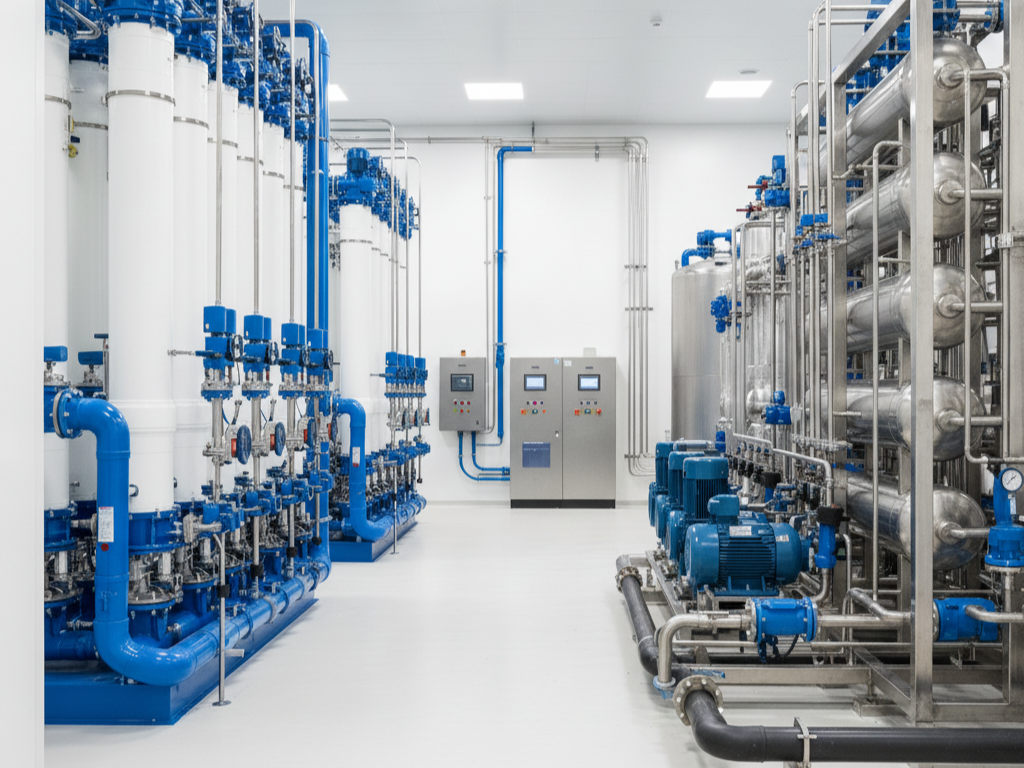
- 영양염류 제거(Nutrient Removal): 폐수 속에 남아있는 질소(N)와 인(P)은 하천이나 호수로 흘러 들어갈 경우, 녹조 현상을 일으키는 주범이 된다. 특정 미생물의 생물학적 작용을 이용하거나, 화학 약품을 투입하여 물속의 질소와 인을 효과적으로 제거한다.
- 최종 소독(Disinfection): 마지막으로 남아있을 수 있는 병원성 대장균이나 바이러스 등 유해 미생물을 완벽하게 제거하는 단계다. 과거에는 주로 염소를 사용했지만, 최근에는 소독 부산물 발생 우려가 적은 자외선(UV) 소독이나 오존 소독 방식이 널리 사용된다. UV 소독은 강력한 자외선을 쬐어 미생물의 DNA를 파괴하는 방식이다.
- 초고도 처리(Advanced Treatment): 만약 이 물을 공업용수나 식수로 재이용하려면 한 단계 더 나아간다. 머리카락 굵기의 수만 분의 일 크기 입자까지 걸러내는 분리막(Membrane) 기술이나 역삼투압(Reverse Osmosis) 공정을 통해 물속에 녹아있는 이온 물질까지 완벽하게 제거하여 거의 순수(H₂O)에 가까운 물을 만들어낸다.
- Nutrient Removal: Nitrogen (N) and phosphorus (P) remaining in the wastewater are the main culprits behind algal blooms (eutrophication) if released into rivers or lakes. Using the biological action of specific microbes or by adding chemical agents, nitrogen and phosphorus are effectively removed from the water.
- Final Disinfection: This is the final step to completely eliminate any remaining pathogenic microorganisms such as E. coli bacteria or viruses. While chlorine was mainly used in the past, methods like ultraviolet (UV) disinfection or ozonation, which have less risk of creating harmful disinfection byproducts, are now widely used. UV disinfection works by exposing the water to powerful ultraviolet rays that destroy the DNA of microorganisms.
- Advanced Treatment: If this water is to be reused for industrial purposes or even for drinking, it goes one step further. Using membrane technology that can filter out particles tens of thousands of times smaller than a human hair, or reverse osmosis (RO) processes, even dissolved ionic substances are completely removed to produce water that is almost pure H₂O.
물과 찌꺼기의 운명은? 두 갈래로 나뉘는 위대한 여정
The Fate of Water and Sludge? The Great Journey Splits in Two

이 모든 과정은 '처리 열차(Treatment Train)'라는 이름처럼 유기적으로 연결되어 있다. 폐수는 '물'과 '찌꺼기(슬러지)'라는 두 가지 흐름으로 나뉘어 각기 다른 여정을 떠나고, 결국 두 흐름 모두 가치 있는 자원으로 재탄생한다.
This entire process is organically linked, like a 'Treatment Train.' The wastewater is separated into two streams—'water' and 'sludge'—each embarking on a different journey, and ultimately, both are reborn as valuable resources.
첫번째, 물의 여정
First, The Water's Journey
1차 처리 → 2차 처리 → 고도 처리를 거친 깨끗한 물은 하천으로 안전하게 방류되어 생태계를 건강하게 유지하거나, 가뭄을 이겨낼 소중한 '재이용수' 로 다시 태어나 도로 청소, 공원 조경, 농업 및 공업용수 등으로 공급된다.
After passing through Primary → Secondary → Advanced Treatment, the clean water is either safely discharged into a river, helping to maintain a healthy ecosystem, or it is reborn as precious 'reclaimed water' to combat droughts. It is then supplied for road cleaning, park landscaping, and agricultural or industrial use.
두번째, 찌꺼기의 여정
Seconds, The Sludge's Journey
각 처리 단계에서 분리된 슬러지(찌꺼기)는 그냥 버려지지 않는다.
The sludge separated at each stage is not simply discarded.
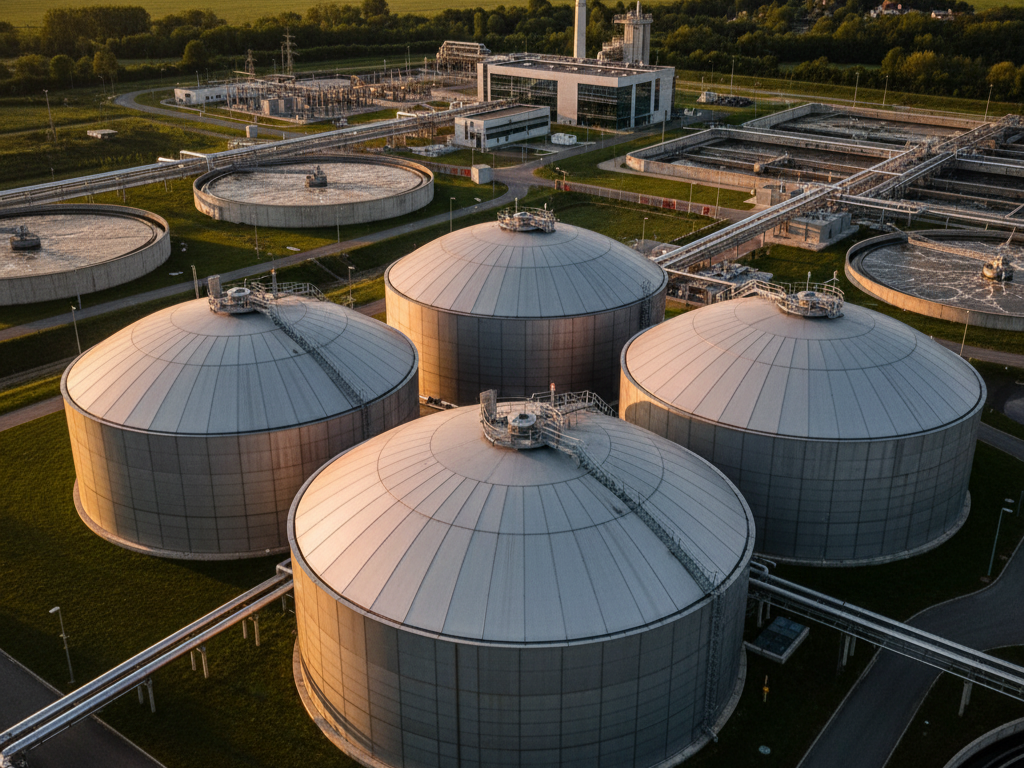
- 농축 및 소화: 슬러지를 모아 부피를 줄인 뒤, '혐기성 소화조'라는 산소가 없는 탱크로 보낸다. 여기서 또 다른 종류의 미생물들이 슬러지를 분해하며 '바이오가스' 를 만들어낸다. 이 바이오가스의 주성분은 메탄(CH₄)으로, 발전기를 돌려 처리장 운영에 필요한 전기와 열을 생산하는 소중한 신재생 에너지가 된다.
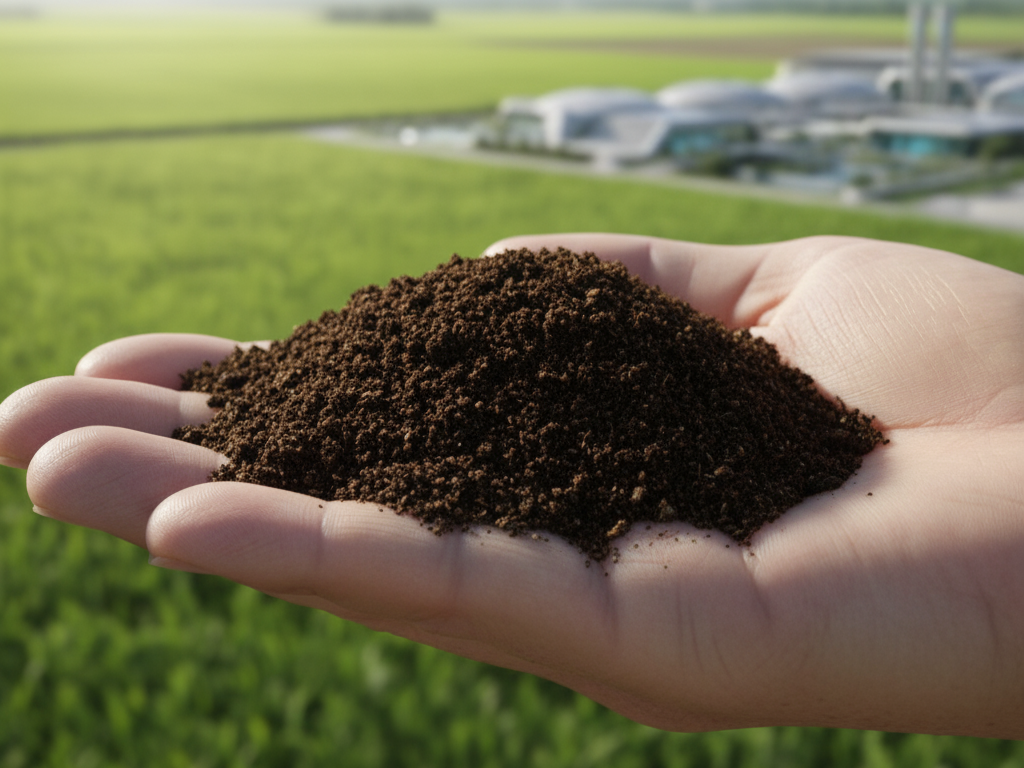
- 탈수 및 자원화: 소화 과정이 끝난 슬러지는 탈수기를 통해 물기를 최대한 제거하여 운반하기 쉬운 케이크 형태로 만든다. 이렇게 최종적으로 남은 고형물을 '바이오솔리드(Biosolids)' 라고 부르며, 유기물과 영양분이 풍부하여 비료나 토양 개량제, 건설 자재 등으로 재활용된다.
- Thickening and Digestion: The sludge is collected to reduce its volume and then sent to an oxygen-free tank called an 'anaerobic digester.' Here, another type of microbe breaks down the sludge, producing 'biogas.' The main component of this biogas is methane (CH₄), which becomes a valuable source of renewable energy, used to run generators that produce electricity and heat for the treatment plant's operations.
- Dewatering and Valorization: After the digestion process, the sludge is dewatered to remove as much moisture as possible, turning it into a cake-like form that is easy to transport. This final solid material is called 'biosolids.' Rich in organic matter and nutrients, it is recycled as fertilizer, soil conditioner, or even construction material.

폐수 처리의 놀라운 잠재력 : 우리가 얻는 3가지 핵심 보물
The Incredible Potential of Wastewater Treatment: The 3 Key Treasures We Gain
그렇다면 이 모든 복잡한 과정을 통해 우리는 구체적으로 어떤 보물을 얻을 수 있는가?
So, what specific treasures do we gain through all these complex processes?
첫번째 보물, 깨끗한 물 (Water Reuse) - '도시의 오아시스' : 최신 고도 처리 기술을 통하면 폐수의 90% 이상을 다시 사용할 수 있는 깨끗한 물로 만들 수 있다. 싱가포르의 '뉴워터(NEWater)'나 미국 캘리포니아 오렌지카운티의 사례처럼, 폐수를 식수 수준까지 정화하여 사용하는 '물 재이용'은 이제 기후 변화 시대에 도시의 물 안보를 책임지는 핵심 전략이 되었다.
1. Clean Water (Water Reuse) - 'The Urban Oasis': With the latest advanced treatment technologies, more than 90% of wastewater can be turned into clean, reusable water. Like Singapore's 'NEWater' or the case of Orange County, California, 'water reuse'—purifying wastewater to drinking water standards—has become a key strategy for ensuring water security for cities in an age of climate change.
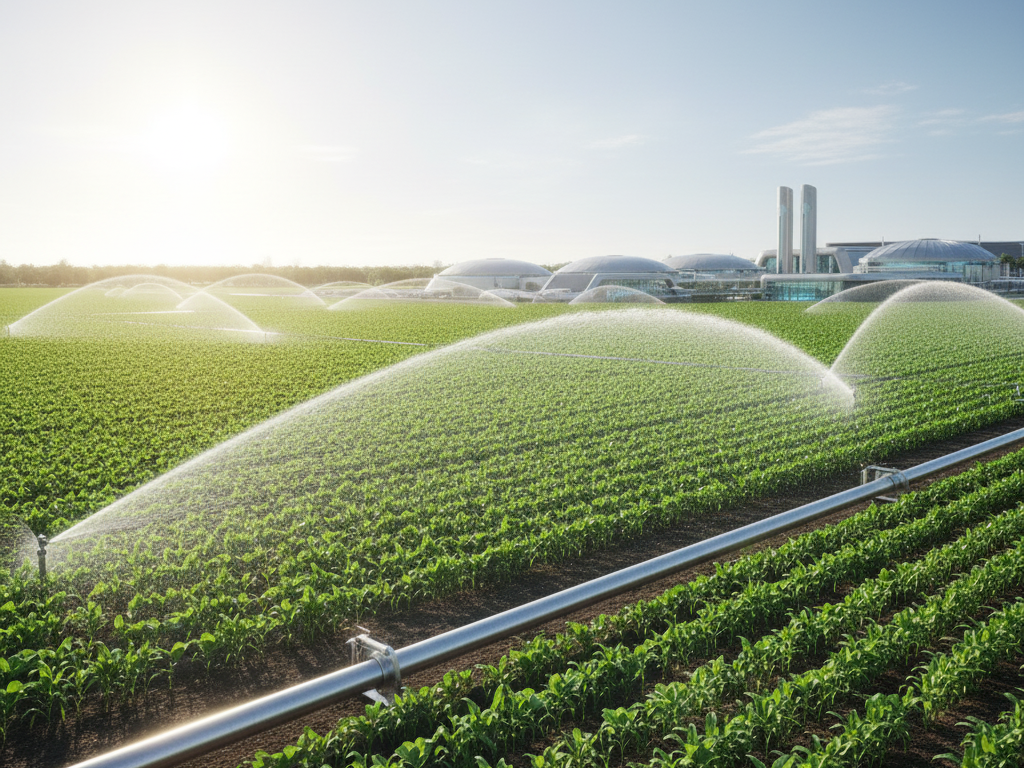
두번째 보물, 녹색 에너지 (Energy Recovery) - '에너지 자립 발전소': 슬러지를 처리하는 과정에서 나오는 바이오가스는 처리장 운영에 필요한 전력의 상당 부분을 충당한다. 일부 선진 처리장은 기술 개발을 통해 외부 전력 공급 없이 운영되는 '에너지 자립형'을 넘어, 남는 전기를 지역 사회에 판매하는 '에너지 생산 시설'로 진화하고 있다.
2. Green Energy (Energy Recovery) - 'The Self-Sufficient Power Plant': The biogas produced during sludge treatment can cover a significant portion of the electricity needed to run the treatment plant. Some advanced facilities are evolving beyond being 'energy self-sufficient'—operating without external power—to becoming 'energy-producing facilities' that sell surplus electricity to the local community.
세번째 보물, 귀한 영양소 (Nutrient Recovery) - '순환 농업의 파트너': 폐수 속에 포함된 질소와 인은 원래 농작물을 키우는 데 필수적인 영양소다. 이를 회수하여 스트루바이트(Struvite)와 같은 고효율 인산 비료로 만들면, 수입에 의존하는 인광석 사용을 줄이고 자원을 지속 가능하게 순환시키는 효과를 가져온다.
3. Valuable Nutrients (Nutrient Recovery) - 'The Partner for Circular Agriculture': The nitrogen and phosphorus contained in wastewater are essential nutrients for growing crops. By recovering them to create high-efficiency phosphate fertilizers like Struvite, we can reduce reliance on imported phosphate rock and promote a sustainable resource cycle.
우리 발밑에서 시작되는 지속 가능한 미래 혁명
A Sustainable Revolution Starting Right Beneath Our Feet
이제 폐수 처리장은 더 이상 냄새나고 소음이 발생하는 혐오 시설이 아니다. 물을 정화하고, 에너지를 생산하며, 자원을 재활용하는 '도시의 핵심 환경 플랜트' 이자, 순환 경제를 실현하는 최전선 기지다.
Wastewater treatment plants are no longer the noisy, smelly, "Not-In-My-Backyard" facilities of the past. They are 'core urban environmental plants' that purify water, produce energy, and recycle resources—the front line where the circular economy is being realized.
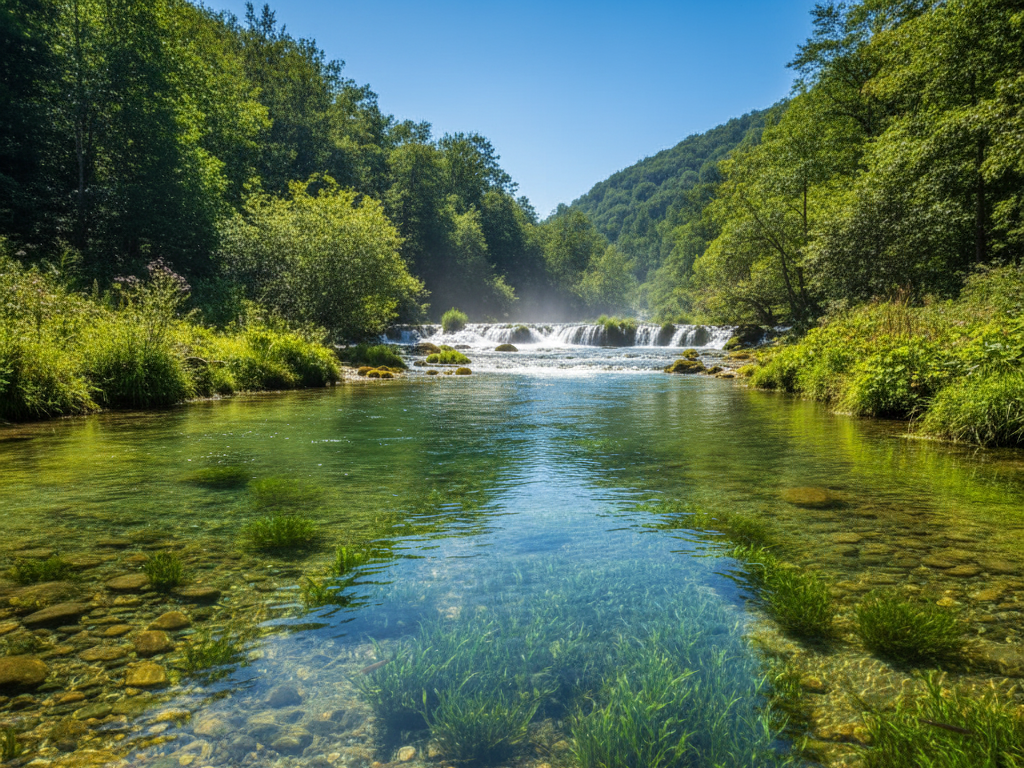
우리가 무심코 내리는 버리는 물속에서 이처럼 놀라운 가치가 재창조되고 있다는 사실, 정말 흥미롭지 않은가? 폐수 공학은 보이지 않는 곳에서 우리의 건강을 지키고, 지구의 지속 가능한 미래를 만들어가는 매우 중요한 기술이다. 오늘부터는 물을 내릴 때마다 우리 발밑에서 24시간 내내 묵묵히 돌아가고 있는 이 위대한 시스템과 그 속에서 일어나는 놀라운 변신을 한 번쯤 떠올려보는 건 어떨까? 우리가 무심코 버리는 물 한 방울이 도시의 미래를 바꾸는 소중한 자원임을 기억하는 것, 그것이 바로 우리 발밑에서 시작되는 가장 위대한 혁명이다.
Isn't it fascinating that such incredible value is being recreated from the water we casually flush down the toilet? Wastewater engineering is a vital technology that protects our health in unseen ways and builds a sustainable future for our planet. From today, when you flush, why not take a moment to think about this great system working silently 24/7 beneath our feet and the amazing transformation happening within it? Remembering that every drop of water we carelessly discard is a precious resource that can change the future of our cities—that is the greatest revolution, and it starts right under our feet.


